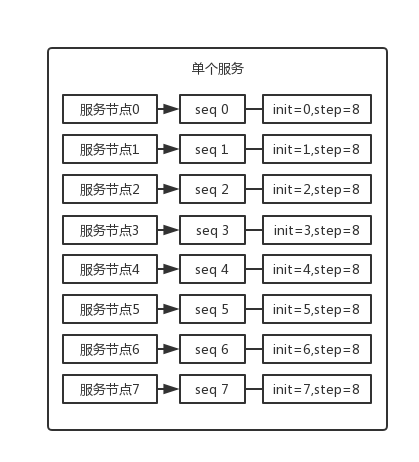
这个就是说你的系统里每次得到一个 id,都是往一个库的一个表里插入一条没什么业务含义的数据,然后获取一个数据库自增的一个 id。拿到这个 id 之后再往对应的分库分表里去写入。
这个方案的好处就是方便简单,谁都会用;缺点就是单库生成自增 id,要是高并发的话,就会有瓶颈的;如果你硬是要改进一下,那么就专门开一个服务出来,这个服务每次就拿到当前 id 最大值,然后自己递增几个 id,一次性返回一批 id,然后再把当前最大 id 值修改成递增几个 id 之后的一个值;但是无论如何都是基于单个数据库。
publicIdWorker(long workerId, long datacenterId, long sequence) { // sanity check for workerId // 这儿不就检查了一下,要求就是你传递进来的机房id和机器id不能超过32,不能小于0 if (workerId > maxWorkerId || workerId < 0) { thrownewIllegalArgumentException( String.format("worker Id can't be greater than %d or less than 0", maxWorkerId)); } if (datacenterId > maxDatacenterId || datacenterId < 0) { thrownewIllegalArgumentException( String.format("datacenter Id can't be greater than %d or less than 0", maxDatacenterId)); } System.out.printf( "worker starting. timestamp left shift %d, datacenter id bits %d, worker id bits %d, sequence bits %d, workerid %d", timestampLeftShift, datacenterIdBits, workerIdBits, sequenceBits, workerId);
if (timestamp < lastTimestamp) { System.err.printf("clock is moving backwards. Rejecting requests until %d.", lastTimestamp); thrownewRuntimeException(String.format( "Clock moved backwards. Refusing to generate id for %d milliseconds", lastTimestamp - timestamp)); }
// ---------------测试--------------- publicstaticvoidmain(String[] args) { IdWorkerworker=newIdWorker(1, 1, 1); for (inti=0; i < 30; i++) { System.out.println(worker.nextId()); } }
}
怎么说呢,大概这个意思吧,就是说 41 bit 是当前毫秒单位的一个时间戳,就这意思;然后 5 bit 是你传递进来的一个机房 id(但是最大只能是 32 以内),另外 5 bit 是你传递进来的机器 id(但是最大只能是 32 以内),剩下的那个 12 bit 序列号,就是如果跟你上次生成 id 的时间还在一个毫秒内,那么会把顺序给你累加,最多在 4096 个序号以内。